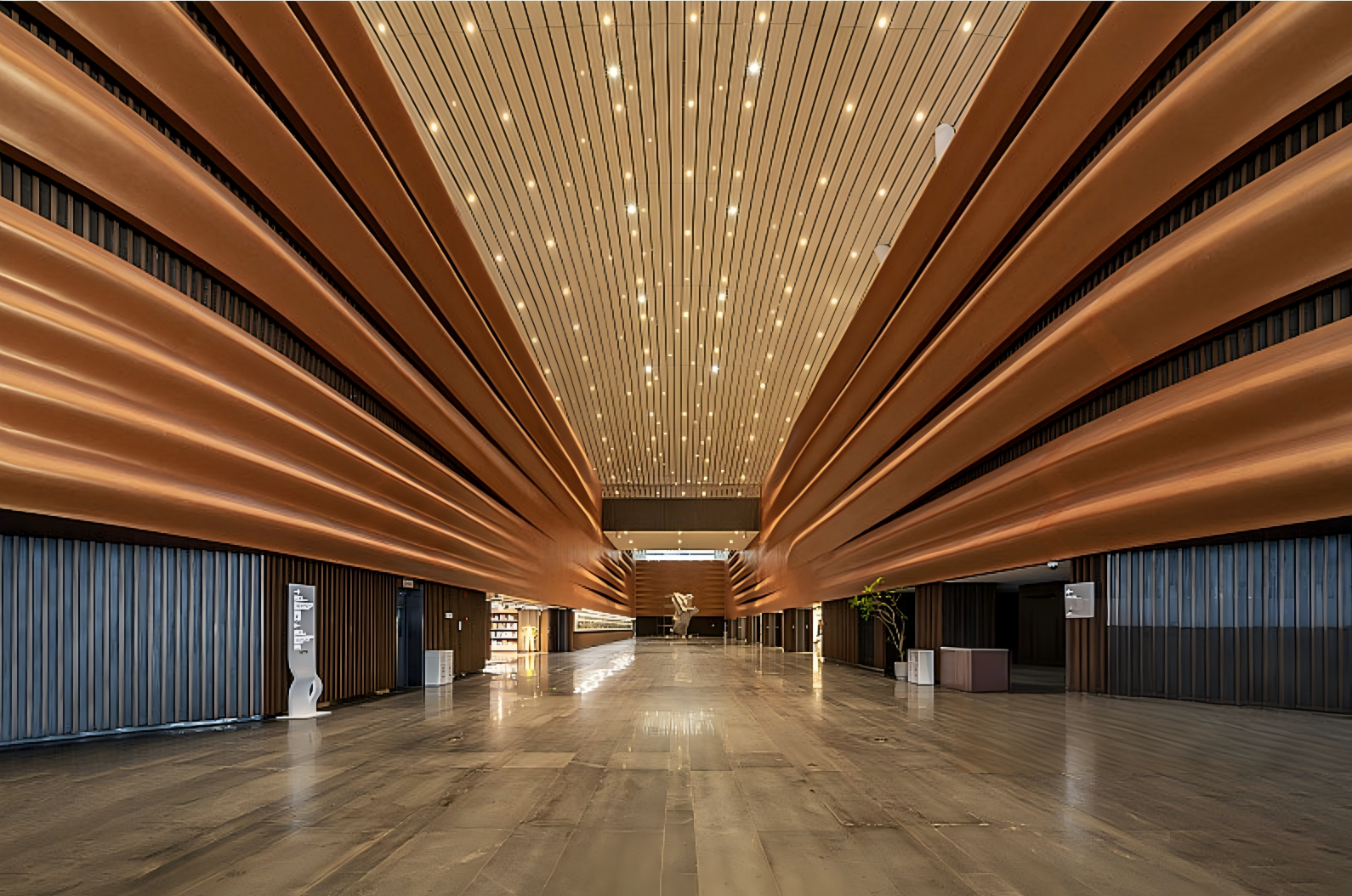
On 8 12, the International Biennale and Joint Art Exhibition Planning Launch was held at the Shenzhen Contemporary Art & Urban Planning Museum. Representatives from art institutions, biennial committees, and independent curatorial agencies across 15 countries jointly unveiled a three-year exhibition cooperation plan, marking a new institutional phase for contemporary art collaboration in the Asia-Pacific region. Guided by the core philosophy of "Art Uniting East and West, Harmony Amid Diversity," the partnership establishes theme curation, artist residencies, and public art as its three priority directions, charting a clear path for cross-cultural dialogue and the shaping of urban cultural identity.
This exhibition balances academic rigor with public accessibility across four key components: a main thematic showcase, parallel exhibitions, urban public art projects, and a Young Artists Unit. Spanning diverse media—including painting, sculpture, installation, video, and performance—the event presents a dynamic fusion of world-class scholarship and vibrant street-level energy. It embodies the vision of "art without boundaries, beauty shared by all," fostering collaboration between creators and audiences from diverse cultural backgrounds to build a thriving new ecosystem for contemporary art.
Since the expression of intent to collaborate in 2025, preparatory work has progressed steadily throughout the year. From 3 to 6 2026, the curatorial team conducted academic research and institutional outreach in Venice, São Paulo, Sydney, and other locations. Nearly ten pre-event curatorial symposia covered core topics including theme selection, artist nominations, and exhibition narrative architecture. At the press conference, the Curatorial Committee clarified that the inaugural International Biennial will serve as the primary deliverable, built upon three pillars: thematic curation, artist residencies, and public art. These pillars will support three concrete initiatives: the "Boundaries & Connections" flagship exhibition, the Global Young Artists Residency Program, and a city-wide public art walking route. This effort aims to connect with the Asia-Pacific cultural exchange network and transform art exhibitions from one-off events into sustained, collaborative endeavors.
Launch the exhibition collaboration at this node, combining contemporary relevance with urban significance. As a frontier of reform and opening-up and a hub for cultural innovation, Shenzhen boasts a dynamic art ecosystem, diverse immigrant cultures, and abundant social resources—creating ideal conditions to maximize the benefits of international artistic collaboration and provide tangible support for enhancing the city's cultural soft power. The curatorial team is now advancing all preparatory work, including artist invitations, artwork logistics, exhibition design, and public education programs. We are building a multi-level platform connecting galleries and communities, ready to welcome artists and audiences from around the world to share in this artistic journey.
Global cultural exchange currently faces challenges such as geopolitical divides, unequal resource distribution, and narrative homogeneity. As a visual language that transcends linguistic and ideological barriers, international art exhibitions play a vital role in deepening multilateral cooperation. This collaborative exhibition initiative will establish an equitable, consultative platform for mutual benefit, fostering consensus and joint action across stakeholders. We will focus on core areas including curatorial scholarship, support for emerging artists, and public art education, continuously investing in these domains. By delivering high-quality exhibitions, we aim to energize cross-cultural dialogue and build an open, diverse, innovative, and shared international art ecosystem—injecting lasting artistic strength into global civilizational exchange and the development of a global aesthetic community.