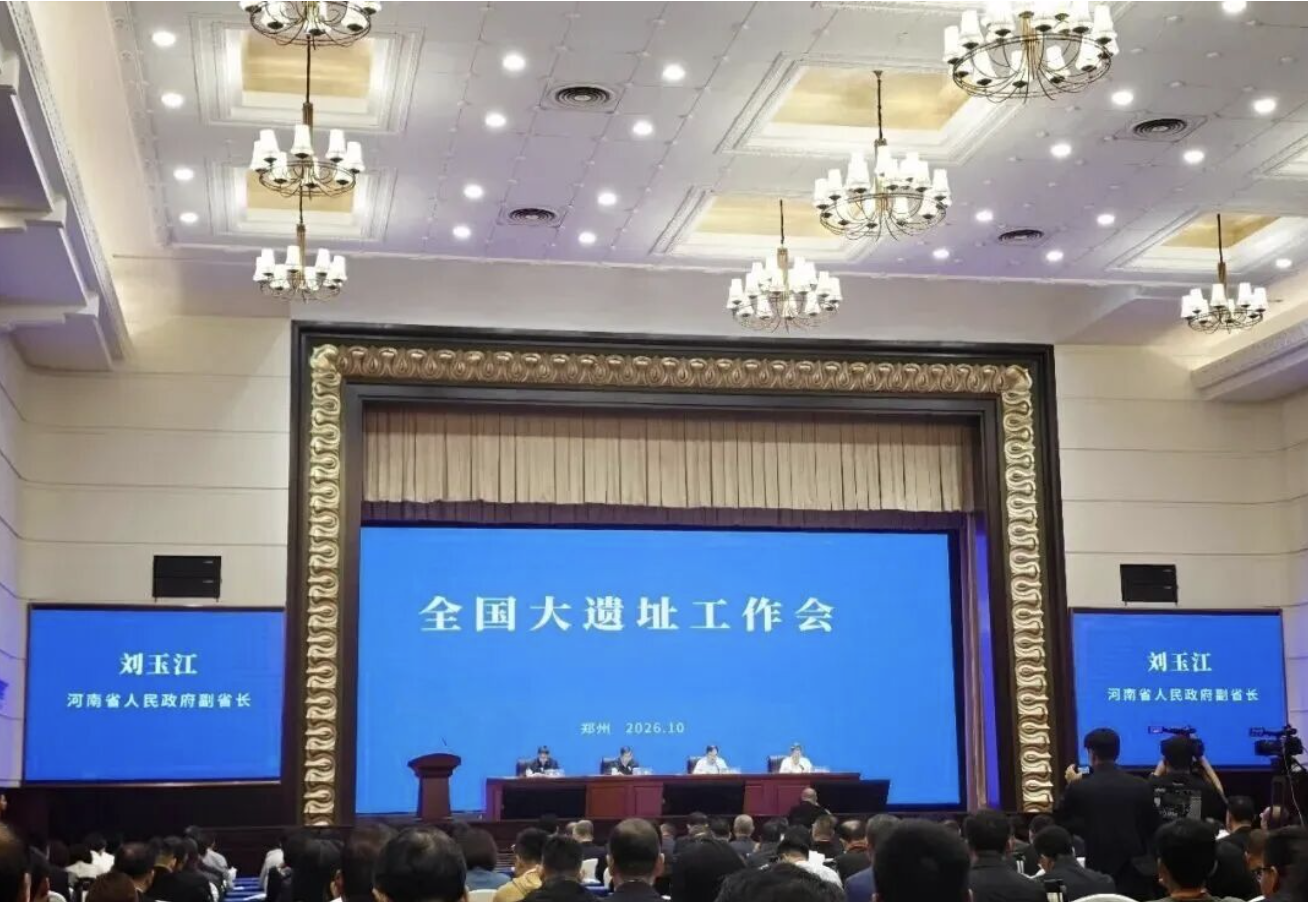
 The meeting emphasized in-depth study and practice of President Xi Jinping's thought on culture, conscientiously implementing the important spirit of General Secretary Xi's remarks on the protection and inheritance of cultural heritage and his key instructions on archaeological work. It reviewed achievements and challenges in large-scale site conservation and outlined tasks for strengthening their protection and utilization in the new era.
The meeting stressed:
- Lead with high-level archaeology to enhance research capabilities on civilization at large sites, making them a key platform for building an archaeological discipline with Chinese characteristics, style, and ethos;
- Anchor efforts in sustainable protection by adhering to lawful and scientific conservation, ensuring full accountability for cultural relic safety;
- Support quality presentation through optimized cultural services at large sites, better realizing relic values and serving the public;
- Guarantee efficient management to revitalize the inheritance and development of large sites, propelling high-quality advancement of these sites during the 15th Five-Year Plan.
During the meeting, representatives from the Hubei Provincial Cultural Heritage Bureau, Sichuan Provincial Cultural Heritage Bureau, Zhengzhou Municipal People's Government, Hangzhou Municipal People's Government, Western Xia Mausoleum National Archaeological Site Park, and Han Dynasty Marquis Haihun National Archaeological Site Park delivered exchange speeches. Participants engaged in discussions on the conference theme, as well as the "Administrative Measures for National Archaeological Site Parks (Revised)" and the "Guidelines for Establishment and Operation Management of Archaeological Site Parks."
Officials from relevant departments of the central and national government bodies, divisions and affiliated units of the National Cultural Heritage Administration; heads of cultural relics administration departments in all provinces, autonomous regions, municipalities directly under the Central Government, and the Xinjiang Production and Construction Corps; main leaders of national archaeological site parks; and representatives from related museums, research institutions, and higher education institutions attended the meeting.