During this year's National Day holiday, both the number of domestic trips and total spending on domestic tourism increased. Behind this growth lies a critical question: As the cultural tourism market heats up, how should culture shape travel to turn this momentum into lasting vitality?
To answer this question, we must first clarify the relationship between culture and tourism. The concept of "shaping tourism through culture and highlighting culture through tourism" reveals their mutually reinforcing dynamic: culture provides depth and quality to tourism, while tourism brings culture out of books and into the public sphere. Culture becomes vibrant through tourism, and tourism gains substance through culture. In practice, this means that "shaping tourism through culture" must be grounded in authenticity—not treating culture as a superficial label, but making it the true foundation of tourism.
In reality, some projects peak on opening day only to fade into obscurity; some travel photography feels generic and transactional. Superficially, this appears to be product homogenization. At its core, it stems from a lack of genuine cultural integration. True "cultural-tourism fusion" isn't about authenticity versus fake—it's about rootedness: deep historical foundations, real-world warmth, and spiritual resonance. To shape tourism through culture, we must move with sincerity.
Authenticity creates distinction. Wen Neng Su Lv thrives because it grows from local soil, carrying elements that cannot be copied. Beijing's Longfu Temple Block brings together time-honored brands like Tongrentang, Daoxiangcun, and Ziguangyuan, integrating interactive experiences, Guochao markets, and craft exhibitions to turn these legacy brands into must-visit destinations. Visitors come not to see a "replica old street," but to experience the aroma of medicine at Tongrentang, taste pastries at Daoxiangcun, and witness craftsmanship at Ziguangyuan. In Wuhan, Hubei—the birthplace of the timeless tale of "High Mountains and Flowing Water," where two souls found understanding—tourists board the "Zhiyin" ship for an immersive theater experience while cruising the Yangtze River. The emotional resonance of "everyone you meet is part of the story" connects with cultural memory. These experiences succeed because they are rooted in genuine historical narratives. In contrast, imitating viral tourist spots or offering generic travel photography fails to highlight unique local culture or meet diverse, personalized consumer needs. Cultural resources do not automatically become tourism products; they require creative transformation and innovative development. Extract the spiritual core and convert it into tangible, experiential forms. Systematically reviewing material and intangible heritage, historical stories, and folk customs to uncover their scarcity and identify their spiritual essence is a crucial step toward moving people through authenticity.
Finding the truth doesn't guarantee emotional impact. If culture is merely displayed statically, visitors remain spectators. A great cultural tourism experience should be immersive, participatory, and take-home-worthy. For example, "Only Henan · Drama Fantasy City" weaves Central Plains history, Yellow River civilization, and individual destinies into its narrative, creating a theater community that transforms tourists from observers into story participants. In Luoyang, Henan, the "Splendid Tang Dynasty Style" theme grew from niche makeup studios into a full-value chain covering on-site photography, traditional performances, and cultural merchandise—turning cultural experiences into tangible industry growth. From one perspective, this reflects how cultural elements are embedded into tourism products during "culture shaping tourism," with culture actively integrated into key industry segments. Visitors feel the atmosphere upon arrival, become part of the scene through their actions, and carry the memory long after departure. This is what it means for "culture to speak."
Enhancing the visitor experience must never come at the cost of authenticity. Local historical artifacts and cultural heritage are irreplaceable and non-renewable; they require protection as the top priority, followed by rational utilization. Tourism development must be grounded in conservation, avoiding excessive commercialization. Instead, tourism should become a journey for people to appreciate Chinese culture and strengthen cultural confidence. Using culture to shape tourism does not mean treating heritage sites as raw material for arbitrary改造; it means finding ways to bring them to life with reverence. For example, Hubei, one of the provinces with the longest stretch along the Yangtze River, has consistently prioritized the preservation, inheritance, and promotion of Yangtze River culture as a key driver of integration between culture and tourism, leveraging a unified "Yangtze IP" strategy. Meanwhile, Zhejiang's Liangzhu site focuses on its status as "the empirical proof of 5,000 years of Chinese civilization," highlighting unique IPs such as jade culture and rice-farming civilization. It has incubated derivative businesses like archaeological blind boxes, digital collectibles, and rice-field camping festivals, transforming cultural symbols into consumer experiences. Preservation and utilization are not opposites; the key lies in whether the approach respects the internal logic of the culture itself. Only when respected can culture endure and thrive across generations.
Digital technology is taking authenticity further. In Dunhuang, Gansu, the "Digital Dunhuang" initiative uses high-precision scanning and 3D reconstruction to preserve murals and painted sculptures. It offers over 6500 high-definition digital resources and content co-creation modules, extending the chain for secondary creation. In Sichuan, the "Sichuan-style Anime IP Incubation Plan" leverages elements like pandas and Sichuan Opera face-changing to build new cultural tourism scenarios that blend technology with fashion through digital art, esports, and animation. Digital preservation breathes new life into immovable cultural heritage, digital presentation fosters emerging formats like immersive performances and digital museums, and digital dissemination turns cultural tourism consumption into a new social practice for young people. Technology is not a gimmick; it is the bridge that brings culture out of books and closer to people. At its core, digitization transforms how cultural value is disseminated, freeing it from the limitations of physical presence and unlocking vast new spaces for reproduction.
As more people connect with authenticity, cultural tourism transcends mere consumption. This summer, "China Cool" became a global buzzword for travel and tourism, driving a significant surge in inbound visit orders during the peak season. Multiple visa-free transit policies have given international visitors ample time to explore tech tourism, industrial tourism, and educational study tours. From reciting Tang poetry and listening to Pingtan storytelling to cheering on village-themed galas and football leagues, from throwing pottery in Jingdezhen, Jiangxi, to chatting over tea in Chengdu, Sichuan, these travelers are not just observers—they are active participants in local life and enthusiastic sharers of Chinese culture. Through their journeys and stories, Chinese culture reaches wider audiences and earns deeper resonance. A China that is real, comprehensive, and multi-dimensional naturally emerges through these experiences.
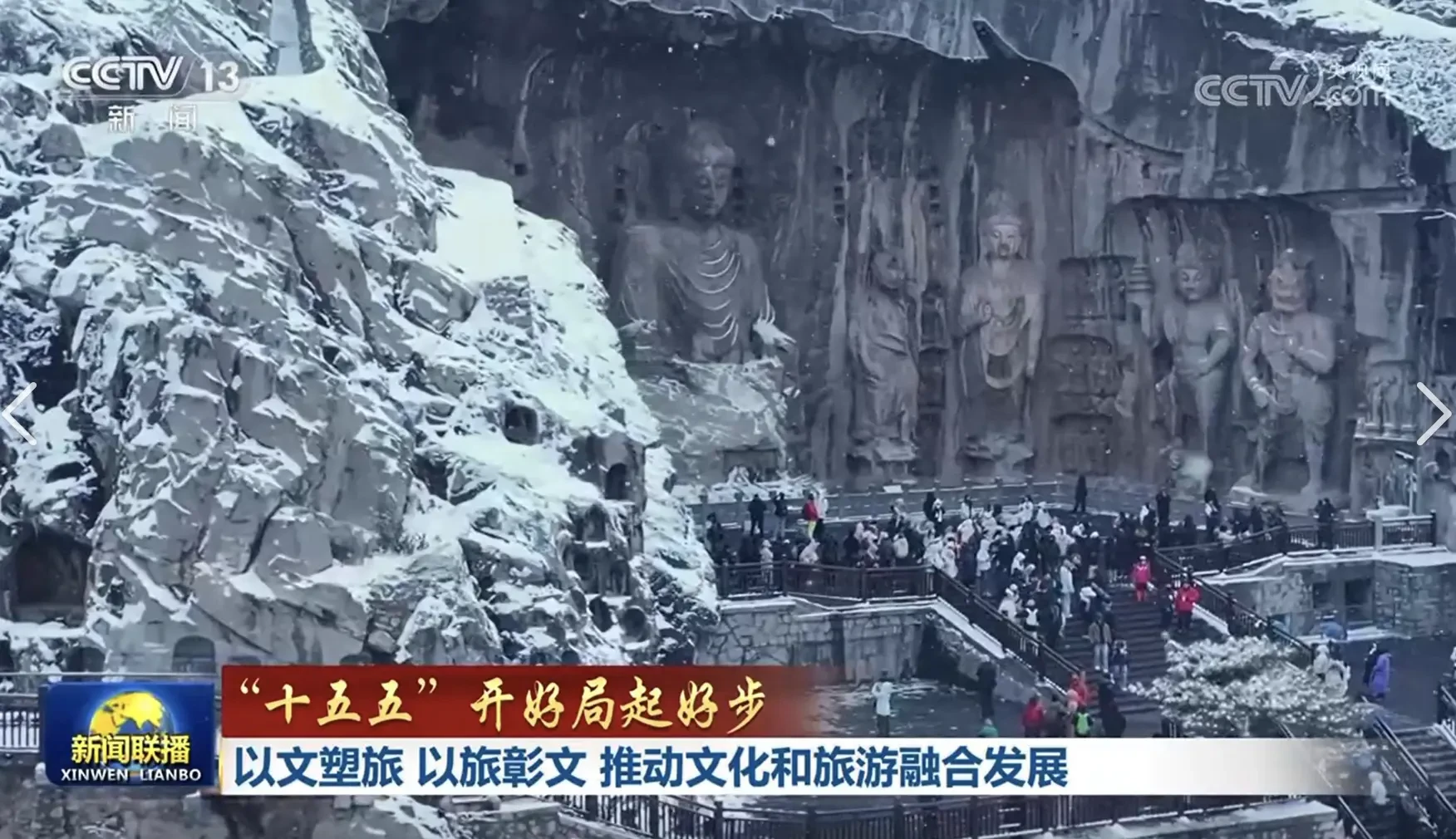
The "15th Five-Year Plan" outlines the need to deepen the integration of culture and tourism—using culture to enhance travel experiences and showcasing culture through tourism—to advance the construction of a global tourism powerhouse. Authenticity is key to using culture to enrich travel: when experiences are genuine, consumer enthusiasm gains momentum; when cultural integration runs deep, the path for cultural tourism extends further.